
Building Counter-Drone Capability on Any Budget
CUAS Coalition's L2 Innovation Guide

The drone threat isn’t theoretical anymore. Correctional facilities are intercepting contraband deliveries. Utilities are documenting reconnaissance flights over substations. Stadiums and event venues face the specter of disruption—or worse. Yet most organizations tasked with protecting critical assets lack any drone detection capability whatsoever.
The common assumption is that counter-drone systems require six-figure budgets and federal authorization. That’s only half true.
Detection is legal. Awareness is achievable. And building meaningful capability doesn’t require a defense contractor’s bank account.
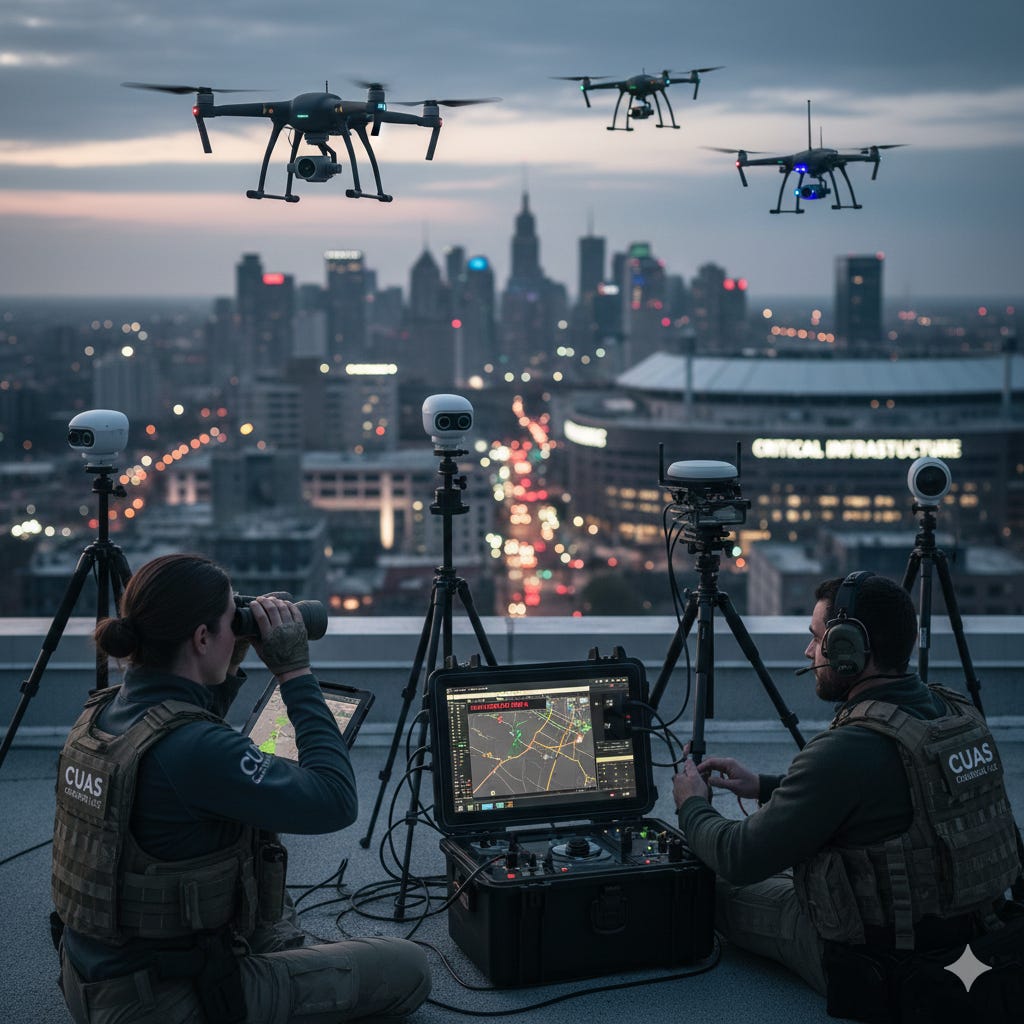
The Five-Tier Reality
We’ve compiled a comprehensive technical report breaking down counter-UAS systems into five investment tiers, from a weekend DIY project under $1,500 to enterprise deployments exceeding $500,000. Each tier uses commercially available off-the-shelf components—products you can order today from standard suppliers.
The report covers specific hardware recommendations with current pricing, complete assembly and integration guidance written for practitioners rather than procurement officers, sensor fusion architectures that actually work, and the regulatory boundaries between what private organizations can deploy versus capabilities reserved for authorized federal entities.
This isn’t a sales brochure. It’s a technical reference built from operational experience—the kind of document we wish existed when we started building these systems.
What’s Inside
Tier 1 starts with software-defined radio, a Raspberry Pi, and open-source drone detection software. Total investment under $1,200. Effective range around 500 meters. Deployable in a weekend.
Tier 3 introduces commercial RF sensors, drone-detection radar, and professional C2 platforms. Investment between $35,000 and $50,000. Detection range exceeding 4 kilometers. The entry point for serious critical infrastructure protection.
Tier 5 delivers full-spectrum detection with sensor fusion, redundant architecture, and SOC integration—plus defeat capability for organizations holding the appropriate federal authorities.
Each tier includes component lists with vendor options, realistic cost breakdowns, step-by-step integration guidance, and honest assessments of capability limitations.
Why We’re Sharing This
The counter-drone market is flooded with vendors selling black-box solutions at premium prices to buyers who can’t evaluate what they’re getting. Organizations end up either overpaying for capability they don’t need or deploying ineffective systems that create false confidence.
We believe informed buyers make better decisions. When security directors understand the technical fundamentals—what RF detection actually detects, why radar matters for non-cooperative targets, how sensor fusion reduces false alarms—they can engage vendors from a position of knowledge rather than dependence.
That’s good for the industry. It’s good for security. And frankly, it’s good for our business, because the organizations that understand this space are the ones building real programs rather than checking compliance boxes.
Get the Report
The full report is available at no cost to qualified security professionals, critical infrastructure operators, and government personnel.
Contact CUAS Coalition LLC:
Email: contact@cuascoalition.org
Website: cuascoalition.com
Include your organization and role, and we’ll send the complete document.
CUAS Coalition LLC provides counter-drone detection, tracking, and mitigation services for critical infrastructure and government clients. We’ve helped draft 23 federal regulatory changes specific to counter-drone technology and work directly with congressional committees shaping C-UAS policy.